
Latest Blog
Military lawyer with EXPERIENCE.

Explore Our Recent Posts
When you hire us, you work directly with
us – no secretaries, no receptionists. You have access to your lead attorney every day and all day. We are here to serve those who serve us.


Dedicated
Passionate
Specialists
Experienced
World Class
Our Posts

Military Pension Division Orders
Shewmaker & Lewis specializes in military pension division during divorce cases. Learn about the importance of crafting pension division orders accurately to avoid leaving former spouses with nothing.

Military Members are Required to get the Covid Vaccine. Are Medical or Religious Exemptions Granted?
The Defense Department has made it clear for some time that all service members must be fully vaccinated again Covid-19, and this includes all reserve component members. Unless there was an approved exemption, the consequences of non-compliance can be severe, including prosecution under Articles 90 and 92 of the Uniform Code of Military Justice (UCMJ) and discharge.
Has there been a process for requesting an exemption on medical or religious grounds? How likely was it that those requests were granted?
Steve and Patty Shewmaker discuss.

You are a Military Service Member that had a Positive Drug Test. What Should You Do?
Military service members are tested twice yearly for drug use. The test is typically a urinalysis and you’ll be screened for marijuana, cocaine, amphetamines and opiates. In some cases you may also be screened for other drugs like barbiturates, LSD, or even steroids. The effect on the service members career can be devastating and include military separation or court martial. What should you do if you come up positive on a test? What if you feel you have been falsely accused? Should you accept the offer of a free trial defense or retain private counsel? Steve and Patty Shewmaker with the Law Firm Shewmaker & Lewis answer these questions and many more in this video.
ROTC and Service Academy Disenrollment Procedures and Due Process
What is an ROTC and Service Academy Disenrollment? When a contracted Cadet commits a violation or acts in a manner unbecoming of a future officer, the university can initiate a formal disenrollment. Each service has internal regulations on how to conduct these hearings. An ROTC Disenrollment Hearing is quite different from a typical trial as is the role of the Cadet’s lawyer. There is some due process and the Cadet is allowed to present a defense and they are allowed notice of evidence that will be used against them. The Cadet has to represent themselves but their attorney has a very important role. Steve Shewmaker and Alexa Lewis of Shewmaker & Lewis discuss ROTC and Service Academy disenrollment hearings in this video. What does due process look like in these hearings and how can the attorney best serve their client?

Divorced Service Members and GI Bill Benefits Transfer. A Spouse’s Recourse for Non-Compliance.
In a Military Divorce an Agreement is Reached to Transfer the GI Bill Benefits. The Service Member Doesn’t Adhere to the Agreement. What Recourse Does the Former Spouse or Dependents Have? Patty Shewmaker and Alexa Lewis with the Shewmaker & Lewis Law Firm discuss in this video.

What Type of Discharges Can You Receive in the Military?
When a member of the armed forces is released from their obligation to serve it’s considered a military discharge. Enlistment in the U.S. military typically requires a substantial commitment. In this article we discuss the various types of military discharges that can occur before that satisfying that commitment, in particular the “Other Than Honorable (OTH) Discharge” which can be devastating to the service member’s benefits and future civilian prospects.

I’m a Military Service Member. Local Authorities Have Dropped My Legal Case. Am I in the Clear?
If you’re a military service member that got into legal trouble but had local authorities decide not to prosecute you are in the clear, right? Wrong. Individuals can be prosecuted by State District Attorneys, Federal Law Enforcement and the Military. Federal and State cases are geographically based while Military cases are status based for active duty personnel. Steve Shewmaker and Alexa Lewis discuss the matter in this video.

What is a Separation Board in the Military? How Does it Differ from a Contested Court-Martial?
From a litigation standpoint, an administrative separation hearing is very similar to a contested court-martial. The Respondent is entitled to have an attorney, call witnesses, cross examine witnesses, and present opening and closing statements. There are some stark differences.

What Happens With TRICARE When a Military Couple Divorces?
For military families undergoing a divorce, one of the biggest concerns of the non-military spouse is whether they and their kids will still be able to access health benefits. In a military divorce, the former spouse (referred to by TRICARE as the “sponsor”), and all of their biological or adopted children only remains eligible for TRICARE if he or she meets certain criteria.
In this video from Shewmaker & Lewis , Steve Shewmaker and Alexa Lewis discuss those criteria, how they may apply under different scenarios and how to navigate the rules.

How Can an Attorney Help at an ROTC Disenrollment Hearing?
During an ROTC Disenrollment Hearing the Cadet’s attorney can not technically speak, but they can be of great assistance to the Cadet. The board will be often deferential to the attorney in allowing as much time as possible to talk to the Cadet. A good attorney in an ROTC Disenrollment Hearing can “read the room” and push the boundaries in giving the Cadet their best chance at a good outcome. Steve Shewmaker and Alexa Lewis discuss exactly how an attorney can help in this video from the Shewmaker & Lewis Law Firm.

Is Every Retirement Account Divisible by a QDRO?
When military couples divorce, assets are typically divided. Does the division extend to their retirement plans? Not necessarily. Qualified Domestic Relations Orders (QDRO) are required. Do those QDROs apply to every retirement account? Not necessarily! Patty Shewmaker and Jimmy Lewis of the Law Firm Shewmaker & Lewis discuss the particulars in this video.
What Happens If You Don’t do a QDRO in a Military Separation or Divorce?
The ramifications if you delay in obtaining a QDRO in a Military Separation or Divorce are severe. You could lose valuable rights and run the risk of forfeiting benefits that were awarded to you. In this video, Patty Shewmaker and Jimmy Lewis of the Law Firm Shewmaker & Lewis discuss the importance of QDROs and what could happen if you neglect to get one.

What is the 10/10 Rule in Military Divorce and How Does That Affect the Pension?
The 10/10 rule applies to former spouses of military members and defines how they receive their portion of the ex’s military retirement pay if they are entitled to it in military divorce cases. Steve Shewmaker and Alexa Lewis of the Atlanta, GA based Law Firm Shewmaker & Lewis discuss in this video.
Military Spousal Support: Can I get Interim Support?
In this video join Alexa Lewis and Steve Shewmaker while they discuss the military’s spousal support requirements. All the branches have mechanisms for interim support that the service member may be required to pay if the couple is estranged or not living together. Steve and Alexa talk about the rules and their application.
As a Former Spouse of a Military Service Member Will I lose Tricare in my Divorce?
There is a high hurdle to receive Tricare for life after a divorce from a service member. Even the rules for receiving Tricare in the year following a divorce are restrictive. The rules can seem complicated on the surface. In this video, Steve and Patty Shewmaker discussTricare, the 20/20/20 and 20/20/25 rules, and a spouse’s status after a divorce.
I’ve Been Convicted of a Crime in Civilian Court. Can the Military Prosecute me for the Same Crime?
Members of the military often believe they cannot be prosecuted in both the military courts and civilian courts. Most have heard of the concept of double jeopardy. However, civilian criminal law and the UCMJ are similar but different. In this video, Robert Capovilla and Mickey Williams of the Law Firm Shewmaker & Lewis discuss double jeopardy, civilian courts and the UCMJ.
Military Divorce: The Court says the Service Can Divide the Pension. What Happens?
Dividing pension benefits in any divorce can create conflict and tension. Service members and their spouses are often at odds when it comes to this issue. All 50 states treat military pensions as marital or community property and a state court can award a portion of military pension benefits to the spouse even in marriages that last less than a year. In this video, Steve Shewmaker and Alexa Lewis of the Law Firm Shewmaker & Lewis discuss what can happen in divorces where one party is the spouse of a service member.
What is “Titling” in a Military Investigation?
Titling occurs when a military investigative service names an individual as a subject in a criminal investigation report. It is not a judicial or legal action and does not mean an individual has been arrested, charged or convicted of a crime. The ramifications of being titled, however, can be far reaching and damaging for the service member, impacting promotional, security clearance and military assignment decisions. The titling can even impact the service member after their military career is over – impacting future civilian employment. Steve Shewmaker and Mickey Williams of the Law Firm Shewmaker & Lewis discuss titling, how it can impact service members and what you should do if you’ve been titled.
Should a Military Member Facing Court Martial go with Outside Counsel?
A court martial is the most serious trial-level military court. The decision the accused military member must make is whether to accept the military criminal defense attorney assigned to them or to hire a civilian military lawyer. The JAG attorney is similar to a civilian public defender in how they serve the accused service member, and may be less experienced than a civilian military lawyer. Steve Shewmaker of the military defense law firm Shewmaker & Lewis discusses that important decision and the factors that go into it.
What is Toxic Leadership in the Military?
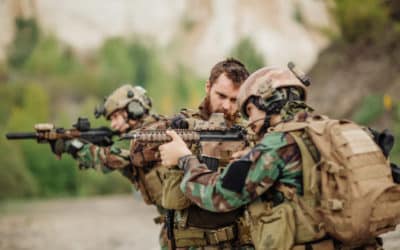
Toxic leadership in the military describes a combination of behaviors that can have negative effects on subordinates, missions and an organization. It can involve “self-centered attitudes, motivations and behaviors” along with lack of concern for others. It can be typified by selfish actions that “deceive, intimidate, coerce, or unfairly punish others.” Shewmaker & Lewis discuss the nature of toxic leadership, the possible ramifications and when a military member needs legal representation.
Case Covered By